BKs at COP31: Resilience, Hope and Unity for the Future of Planetary Care: Report 6 : 20 November
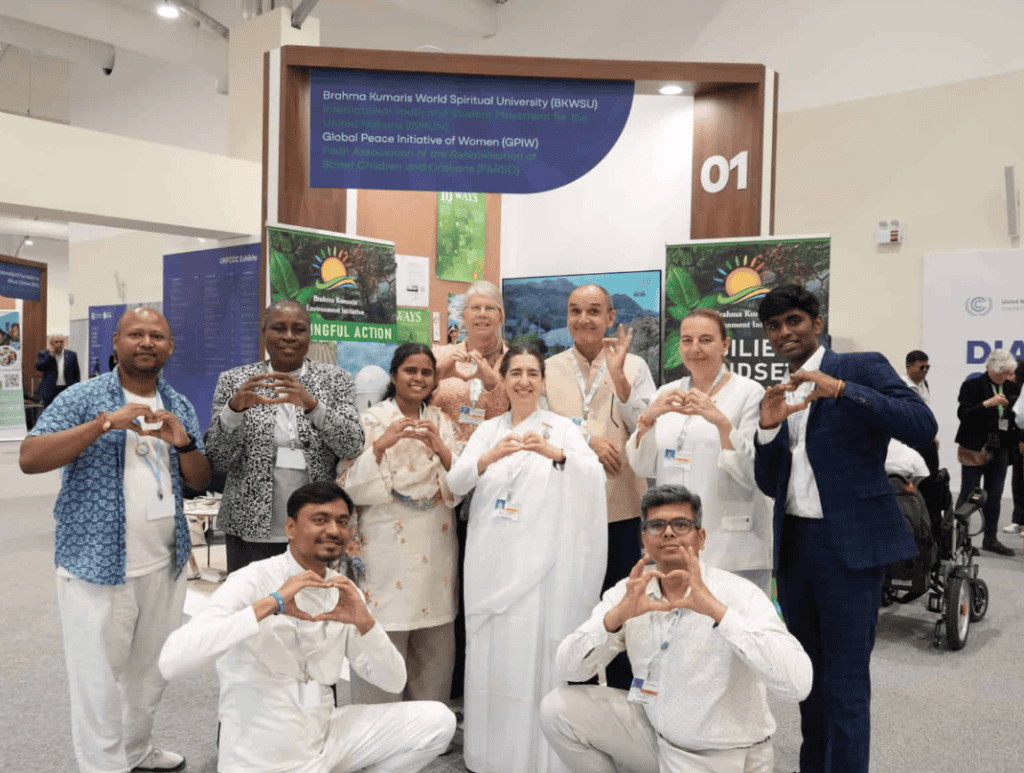
As COP31 came to a close, our Brahma Kumaris COP team completed their participation at the conference by sharing a simple, heartfelt call: global policy action must go hand in hand with a shift in human consciousness. Across an interfaith press conference, a Cryosphere Pavilion dialogue, and a Climate Wisdom Studio conversation, we came together with faith leaders, scientists, and youth advocates around climate justice and care for the Earth. From moving beyond fossil fuels and protecting melting permafrost to embracing meditation and hopeful storytelling, this final report reflects our message which gets to the heart of what is needed for a sustainable future – lasting planetary care can only grow when scientific insight is united with ethical courage and inner peace.
World Council of Churches Interfaith Liaison Committee: Care about Climate: Fuel the Future, not the Climate Crisis
Press Conference 20th November
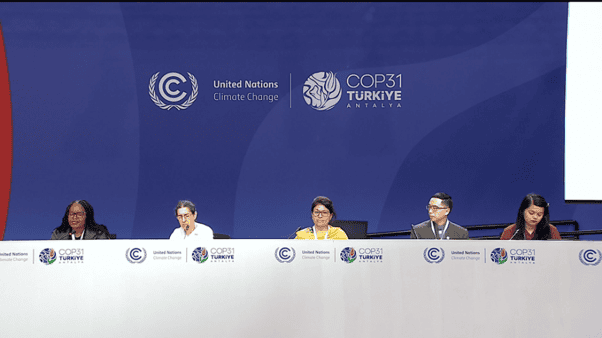
From Left to Right: Sostina Takure, ACT Alliance, Zimbabwe; Maureen Goodman, Brahma Kumaris, United Kingdom; Bijaya Bajracharya, Lutheran World Federation, Nepal; Alex Tan, Buddhist, Tzu Chi Foundation, Singapore; Michelin Sallata, Indigenous youth, Kibaid Church, Indonesia
This interfaith press conference highlighted the shared commitment of faith communities to climate justice, ethical responsibility and a transition away from fossil fuels.
Sostina said as a person of faith, listening to the negotiations, her question is ‘Where is the ethical compass?’ Love for our neighbours and care for the planet are our moral duty, and climate finance isn’t an act of charity. A just transition is an ethical one and one of stewardship.
Maureen emphasised the need for a shift in our awareness and mindsets, to a more spiritual one, in order to bring about different decisions that consider the whole planet and all humanity. It is about the confluence of two living systems, the living system of consciousness (thought) and of the earth. Each affects the other.
Bijaya shared that Nepal has contributed very little to the climate crisis, but has been affected by one of the biggest climate disasters. We know that climate impacts are unequal, making human rights and humanitarian principles essential. Climate justice requires accountability not charity. Climate change is a human rights crisis.
Alex highlighted the need for an ‘all of societal approach’ and one working with communities to find localised solutions. Our way forward must begin by reflecting on the values behind our current approach to climate change, and ask if these values will allow us to truly lessen the suffering of those in need.
Michelin shared about the impact of climate change in Indonesia. It is about our food, medicine and land going up in smoke. She called for faith communities to speak and walk hand in hand with communities. When we stand together, faith can turn our stories into a shared moral code
Watch the full recording here
Keeping Cool: Mobilizing Science and Faith Together to Protect the Cryosphere
Cryosphere Pavilion on 20th November
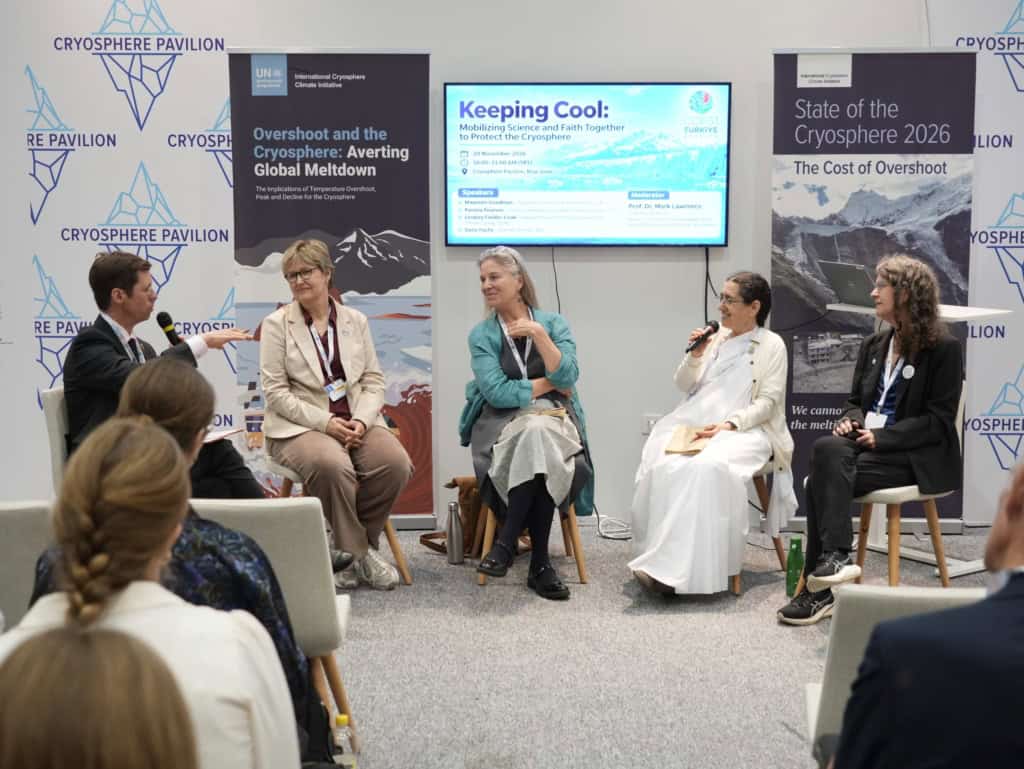
From Left to Right: Lindsey Fielder Cook, Interim Deputy Director and Representative for Climate Change, Quaker United Nations Office, Prof. Dr. Mark Lawrence (Moderator), Scientific Director, Research Institute for Sustainability (RIFS) at GFZ , Maureen Goodman, Programme Director, Brahma Kumaris, UK, Prof. Dr. Doris Fuchs, Scientific Director, Research Institute for Sustainability (RIFS) at GFZ, Pam Pearson, Director of the International Cryosphere and Climate Initiative
Mark introduced the session by reflecting on the fact that Science and Faith have historically been at odds with each other and although there have been meeting points between the two, there have not been many cooperative projects between them. So the aim of the session was to help bridge the gap between Science and Faith and explore how this could happen over finding solutions to the Cryosphere.
Lindsay introduced the topic about the interaction between faith and science by noting the need for peace and justice, which were considered together in the IPCC report of 2017 but not since. Melting permafrost as an issue was not dealt with initially. Stressing cryospheric water resources, she argued North Pole geoengineering is inappropriate when global warming’s actual cause must be addressed first. Indigenous effects and care for creation outweigh military, political, or apocalyptic views.
Maureen pointed out that Nordic countries, such as Iceland, have been more pro-active politically in dealing with climate change, compared with other countries but that a major problem with integrating ideas about climate change worldwide is that people are working in ‘silos’, possibly due to fears such as a loss of political and economic power. Maureen considered humility, learning and listening and having religious leaders in each COP delegation would greatly enhance the profile of faith organisations at COP.
Doris spoke about how faith-based delegates put justice and human dignity in front making ‘common ground’ possible. In comparison, political scientists use a different approach and are often up against powerful lobbyists who are keen to promote their own interests.
Pam stressed the irreversibility of melting permafrost and up to 20 metres of long-term sea level rise. Multi-generational impacts are missing amid election-cycle focus and the fossil fuel lobby maximising short-term profits. Since the cryosphere responds over millennia, hope lies in communities finding practical solutions, not geoengineering – described as ‘playing God’.
Climate Wisdom on 20th November
Resilience and Hope for Planetary Care
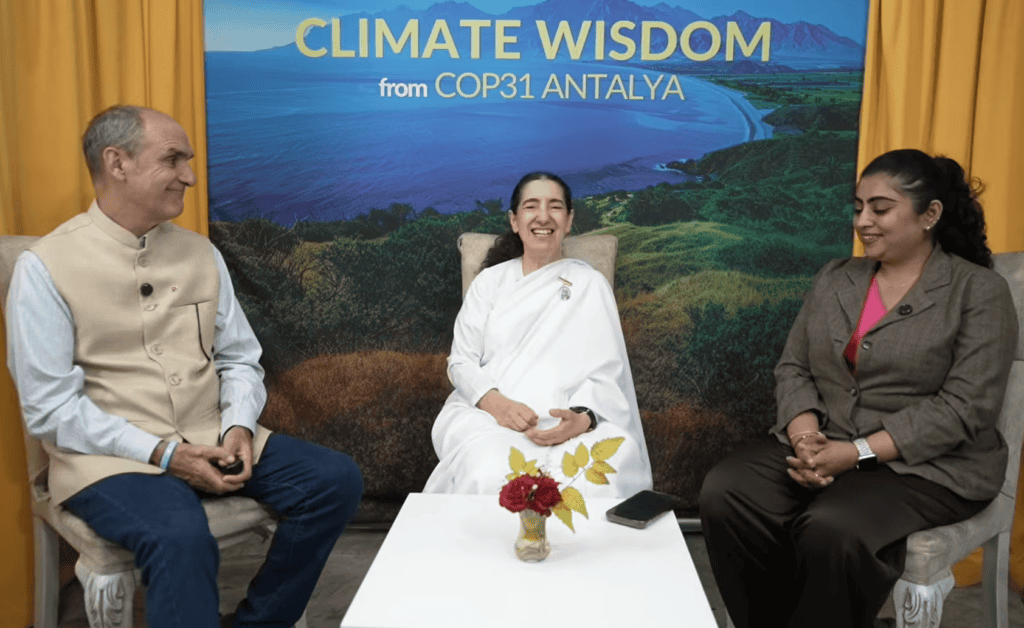
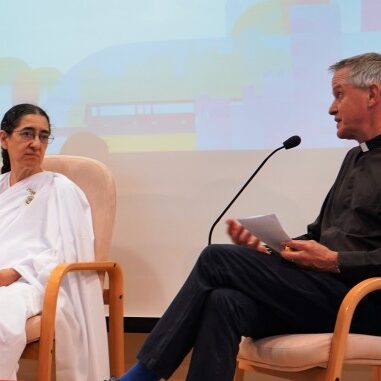
From Left to Right: Anchor Golo Pilz, BK Maureen Goodman, and Chehek Bilgi.
Meaningful climate action requires more than policies and technological solutions; it demands a shift in human consciousness, responsible storytelling and individual choices.
In this Climate Wisdom Studio discussion, filmmaker and youth climate advocate Chehek Bilgi and Maureen Goodman, UK Programme Director and UN Vienna Representative of the Brahma Kumaris, explore how environmental awareness can translate into compassionate, practical action.
Chehek emphasizes the power of solution-focused storytelling: “We know there is a problem, but then we also know there are solutions, and a lot of cohorts are already working towards a solution.” Drawing on her documentaries featuring women farmers in Gujarat, she highlights sustainable agriculture, community resilience and the importance of empowering young climate advocates through credible information.
Maureen underscores the transformative role of meditation: “I have to make a conscious choice of my thinking, first of all, and then everything will follow.” Together, they advocate moving beyond fear, consumerism and narrow interests towards ethical leadership, inner resilience and collective responsibility for a sustainable future.
Related News

Programme : BK Activities at COP30 at a glance