Brahma Kumaris at COP29, 11th – 13th November

Every year, the COP meets to determine ambitions and responsibilities for climate action, and to identify and assess climate measures.
This year’s conference is hosted by Azerbaijan which holds the COP29 presidency.
The presidency’s plan is based on two pillars:
- enhancing ambition, to ensure all parties commit to ambitious national plans
- enabling action, which highlights the vital role of finance as a crucial tool for transforming ambition into tangible actions, reducing emissions, adapting to climate change and addressing loss and damage.
Over the next two weeks, around 80,000 delegates are expected to discuss the international agreements on climate action. The Brahma Kumaris is one of 4,000 accredited observer organisations and is represented by an experienced team. The Brahma Kumaris’ response to the crisis arises from a vision and way of life rooted in principles of peace, compassion, interconnectedness and non-violence.
While the World Climate Action Summit got underway, the Brahma Kumaris team in Baku launched their daily live stream panel discussion: ‘Climate Wisdom’ which aims to bring the latest science, policies, and wisdom from the COP29 climate conference directly to our global audience. This first COP29 Climate Wisdom conversation began with a discussion on the power of personal agency, making brave personal choices and working collaboratively to bring about future change.
11 November, Healing Our Planet: Insights from Spirituality, Medicine, and Food Systems
Golo Pilz and Maureen Goodman in conversation firstly with Dr. Ronald D'Mello and then with Juliette Tronchon.

Left to Right: Golo Pilz, Adviser Renewable Energy Brahma Kumaris; Maureen Goodman, Programme Dir., Brahma Kumaris, UK and Dr. Ronald D'Mello, Director of Indian Hospital, Baku

Left to Right: Golo Pilz, Maureen Goodman, Juliette Tronchon, Head of UN Affairs ProVeg Intl.
Dr. Ronald D'Mello spoke about how we have to create an inner paradigm shift from being selfish to sensible. “It is senseless to be exploiting the earth and planet for everything.”
Juliette Tronchon shared about the impact of our diet choices on the planet and how we can bring about change by taking that first step to make changes to our diets.
Maureen Goodman shared with us about how all faiths teach about how to have a flourishing relationship with the planet, how meditation can help reduce eco-anxiety, and the ancient Indian principle of Amisha - to not create any harm for any living being.
“It is an important time to explore our relationship with the planet. We need to move from a relationship of dominance and exploitation to one of respect, love, care, gratitude… and if we put these kinds of values at the heart of decision-making, then, we will make very different choices which will enable the planet to flourish in the future.” Maureen Goodman
12th November, Beyond Numbers: An Interfaith Dialogue on the New Collective Quantified Goal (NCQG) from Faith and Ethical Perspectives

Left to Right: Harjeet Singh, Snr advisor at CAN International; Valeriane Bernard, Maureen Goodman, Hindou Omari Ibrahim, President of the Association for Indigenous Women and Peoples of Chad
This dialogue offered a platform to explore key aspects of the NCQG from faith-based and ethical perspectives. Delegates discussed what is needed to develop a funding model that prioritises accountability and transparency and responds to the real needs of climate-vulnerable communities, women, youth and indigenous peoples.
“For Indigenous peoples, it’s not just about where the money is but how it’s accessible and whether it truly supports us. Out of the $1.7 billion promised for Indigenous peoples, only 2% has actually reached our communities.” Hindou Omari Ibrahim
12th November, Innovating for a Greener Tomorrow
Today in the climate studio the discussion was around simpler and less costly technical innovations, such as, electricity storage solutions, solar cooking and spiritual innovations.

Left to Right: Maureen Goodman, Programme Dir., Brahma Kumaris, UK and
Dr. Rashi Gupta, Dir. Vision Mechatronics Ltd.

Left to Right: Golo Pilz, Adviser Renewable Energy Brahma Kumaris; Maureen Goodman, Programme Dir., Brahma Kumaris, UK; and Keith Wingeard, Strategic Partnerships Manager, Solar Cookers International
Maureen Goodman: “There has to be a change in heart and world vision to see all human life as equally sacred and valuable. The voice of faith is important because our (faith) teachings tell us a lot about how we can interact with nature and the earth in a restorative, harmonising way and in a way that respects the interconnectedness of all life.“
Dr. Rashi Gupta: “After we got them (a rural school) electricity and the internet the school's admission multiplied, especially girls. I asked one little girl why she was coming to school now and she said because there was water in the toilets now… We need to make people aware of these technologies and their benefits. First we have to change awareness. Second, we need to collaborate and not compete.”
Keith Wingeard: “Something as simple as a solar cooker can be really beneficial for the health of (these) women and children… Solar cooking can be a health benefit, an environmental benefit, climate benefit and a human benefit “
Golo Pilz “The simpler gadgets are easier to maintain and have a long life. We need to look into the simple solution, which is also a lifestyle change.“
13th November, Values Guiding the Just Transition to Clean Energy

Left to Right: Vibha Dhawan, Director General, Energy and Resources Institute (TERI); Sonja Ohlsson Brahma Kumaris Environment Initiative; Maureen Goodman, Programme Dir., Brahma Kumaris, UK; Golo Pilz, Adviser Renewable Energy Brahma Kumaris.
Panellists spoke on how value-based leadership can guide more effective responses to climate change. Both Golo and Vibha shared how different kinds of solar projects can transform the lives of everyday people in India. Maureen spoke about the values that are needed to underpin any just transition to clean energy such as: generosity of spirit, a sense of interconnectedness and value for all life leading to a culture of respect.
13th November, How Women’s Leadership can Achieve Climate Justice

Left to Right: Dr Iyad Abumoghli, founder and director of UNEP Faith for Earth Council; Prof Husna Ahmad, CEO Global One 2025; Natavan Mammodova, COP29 Organising Committee; Maureen Goodman, Programme Dir Brahma Kumaris, UK
UN figures indicate that 80% of people displaced by climate change are women. Their major involvement in preparing food and fuel collection makes them vulnerable when flooding and drought occur. This issue, as well as gender inequalities faced by women in leadership positions and climate finance, were discussed by a Faith Pavillion panel facilitated by Husna Ahmad.
13th November, Spirituality and Science in Global Climate Solutions
A powerful back-to-back dialogue which highlights that spirituality and science can go together to address climate challenges. What must happen to bridge the gap between science and spirituality?

Left to Right: Golo Pilz, BK Adviser on Renewable Energy; Maureen Goodman, Programme Dir., Brahma Kumaris, UK; Dr Lucy Wallace, Director of Global Relationships, EIT Food.

Left to Right: Golo Pilz; Maureen Goodman; Isabelle Pereira, Coordinator of Religion and Environment of ISER (Institute of Studies on Religion).
Dr Lucy Wallace: “People should do something because they believe it is the right thing. People should look to their values and make decisions based on love, not on fear.”
Maureen Goodman: “Now, we realise that the voice of science and the voice of faith are not contradictory. It means there is a coming together and recognition of how one impacts the other.”
Isabel Pereira: “When people discuss matters of climate change, or are informed through their faith communities, they trust it more because it is coming from a place where they feel welcome, with the people they love and trust.”
Golo Pilz: “It is just a question of people of faith joining hands and organisations of faith joining hands. The power of the gathering and the power of the world community just have to unite.”
Related News
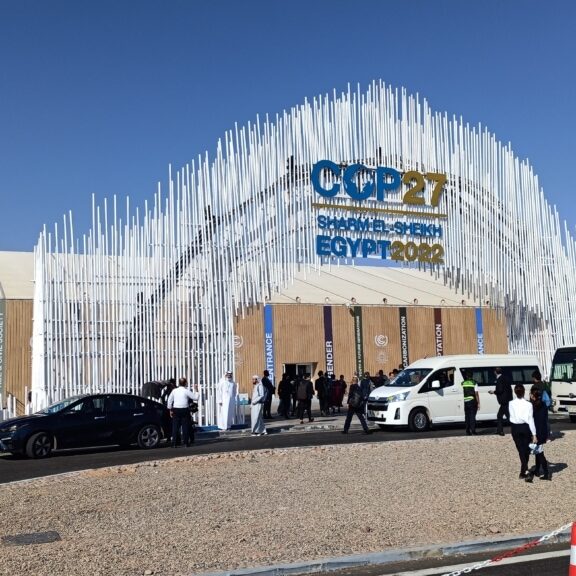
First Report on the UN Climate Change Conference

World Environment Day (Youth events).